From Our Research Plots
Prairie weeds, up close
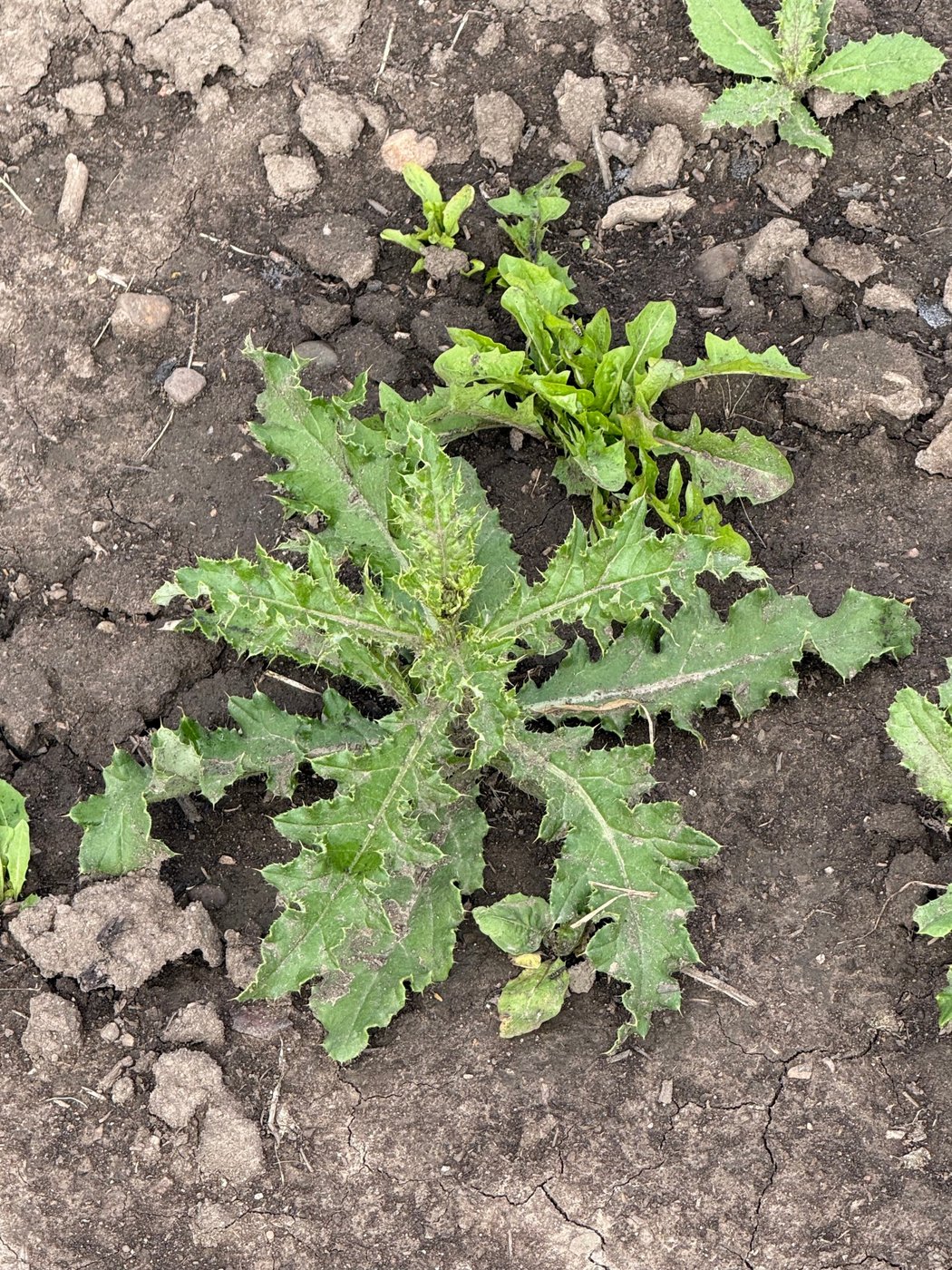
Photo © Shekhar KC, AAFC
Photo © Shekhar KC, AAFC — Press Esc or click × to close
From the molecular drivers of resistance to the producer's spray decision — integrating weed multi-omics, herbicide-resistance diagnostics, and AI-assisted detection into one smart system that keeps Prairie growers ahead of resistant weeds.
Wild oat and kochia are the Prairies' most troublesome weeds, and increasingly they cannot be controlled by the herbicides growers rely on. Too often a producer learns a herbicide has failed only by watching it fail — and paying for the weed seed returned to the field. This program replaces reactive spraying with earlier warning and resistance-aware decisions.
Sources: Agriculture and Agri-Food Canada and provincial weed-resistance surveys; Saskatchewan Ministry of Agriculture.
The most recent Prairie weed survey counted weeds in 4,077 fields of common annual crops across the three Prairie provinces. Total weed densities were the highest recorded since the 1980s, attributed to relatively wet conditions through most of the survey years. These are the ten most abundant species, and they set the priorities for our diagnostics and detection work.
Method: a stratified random sample of fields across the Prairie provinces, surveyed in late summer, with weeds counted in twenty 50 × 50 cm quadrats per field. Crops surveyed included barley, canola, chickpea, corn, durum, field pea, flax, lentil, mustard, oat, pinto bean, soybean, spring wheat, and sunflower.
Source: Top 10 Weeds on the Prairies fact sheet, 2019–2023 Prairie weed survey (prairieweeds.com).
One connected pipeline turns resistance biology into decisions a producer can act on — and every field result feeds back to sharpen the science.
A preview of the producer decision-support tool at the end of the pipeline. Pick any major Prairie weed and herbicide mode-of-action group to see its indicative resistance risk on the Prairies, what it means, and what to do — drawn from the provincial resistance surveys cited below.
Indicative only, based on published Prairie resistance patterns — not a substitute for a resistance test or agronomist advice. Always confirm before making a spray decision.
Ratings synthesise these Prairie surveys and monitoring. Where a weed–group combination is not yet documented on the Prairies it is shown as lower-risk but still to be stewarded; Ontario and US findings are flagged only where they signal an emerging Prairie threat. Provincial percentages are directional and shift with each survey round.
We turn discovery into decisions on the farm. Through producer collaboration, long-term field research, and decision-support tools, we put resistance-aware guidance directly in the hands of Prairie growers and their agronomists — and channel what we learn in the field back into the science.